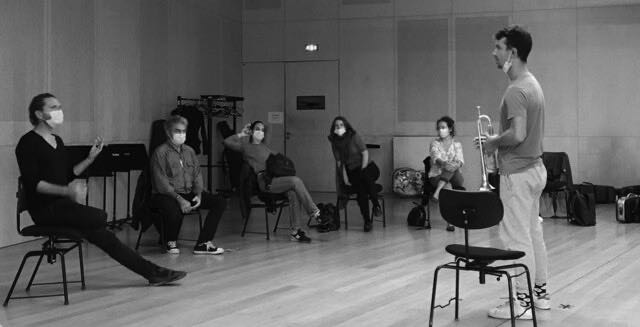
Some fifty musicians seated in a large circle in a rehearsal room during a workshop.

Artist
Health

Passing on and sharing
The joy of effort

Functional disorders

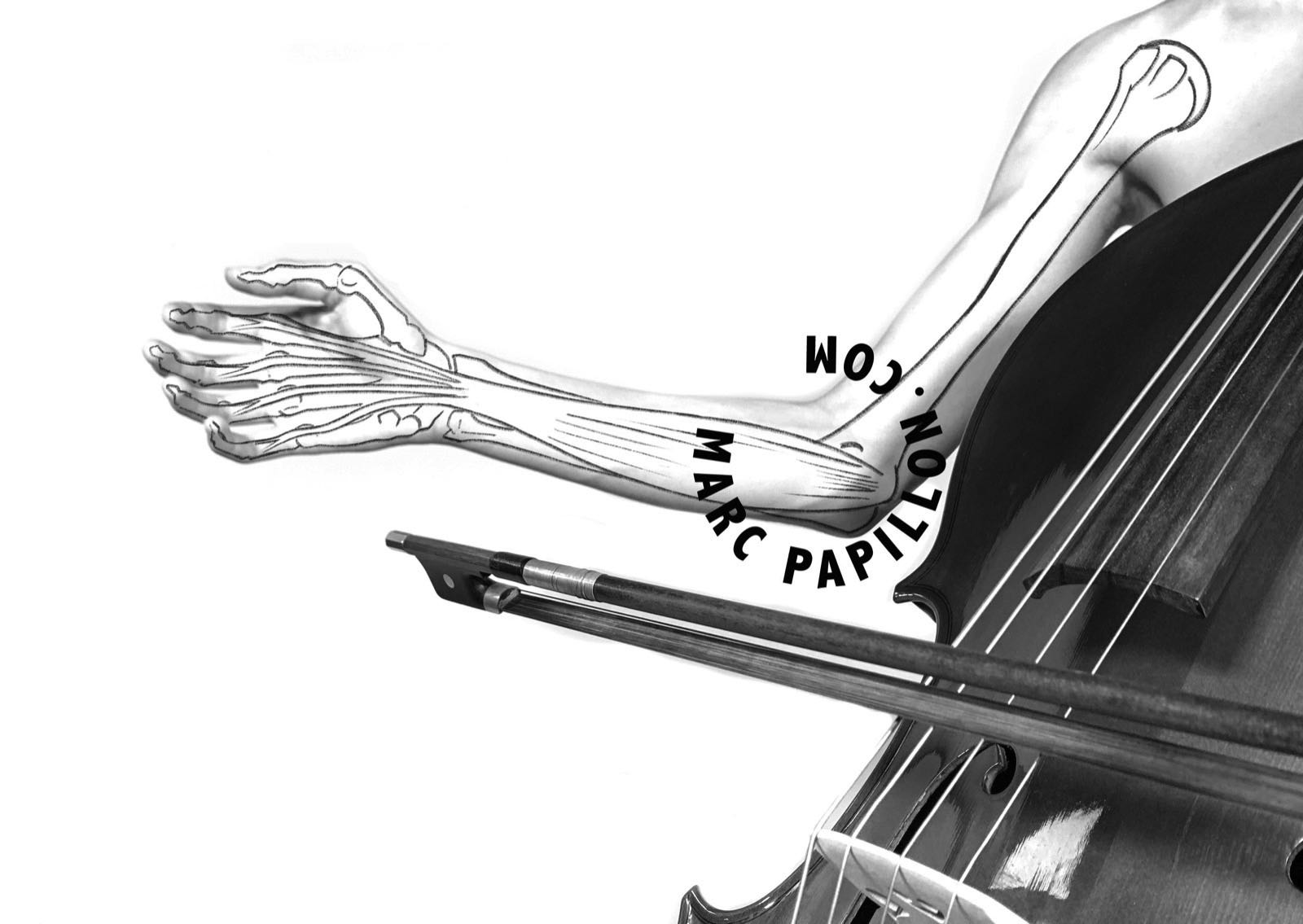
A forearm above a bow, with the finger flexors drawn.

Zero pain, zero anxiety: just the joy of playing!

The functional disorders that affect musicians are now well documented:

  • overuse syndromes of muscles and tendons (inflammatory or not),
  • nerve entrapments,
  • focal dystonia.

The functional disorders that affect dancers are also well documented today:

  • joint problems: hip impingement and osteoarthritis,
  • posterior ankle impingement syndrome,
  • hallux valgus and first MTP joint osteoarthritis,
  • Lisfranc joint overload,
  • bone marrow oedema, stress fracture (base of the second metatarsal),
  • disc degeneration, disc herniation, low back pain, scoliosis,
  • dehydration, overtraining, eating disorders.

Actors’ disorders are, of course, not as specific as those of dancers and musicians.

Other problems just as disabling exist, even though they are not classified as disorders:

  • painful muscle tightness,
  • difficulty concentrating and getting organised,
  • negative stress, performance anxiety…

“Tendinitis” is a misused term that still causes a great deal of confusion. These complaints can be truly disabling.

Tongue and breathing

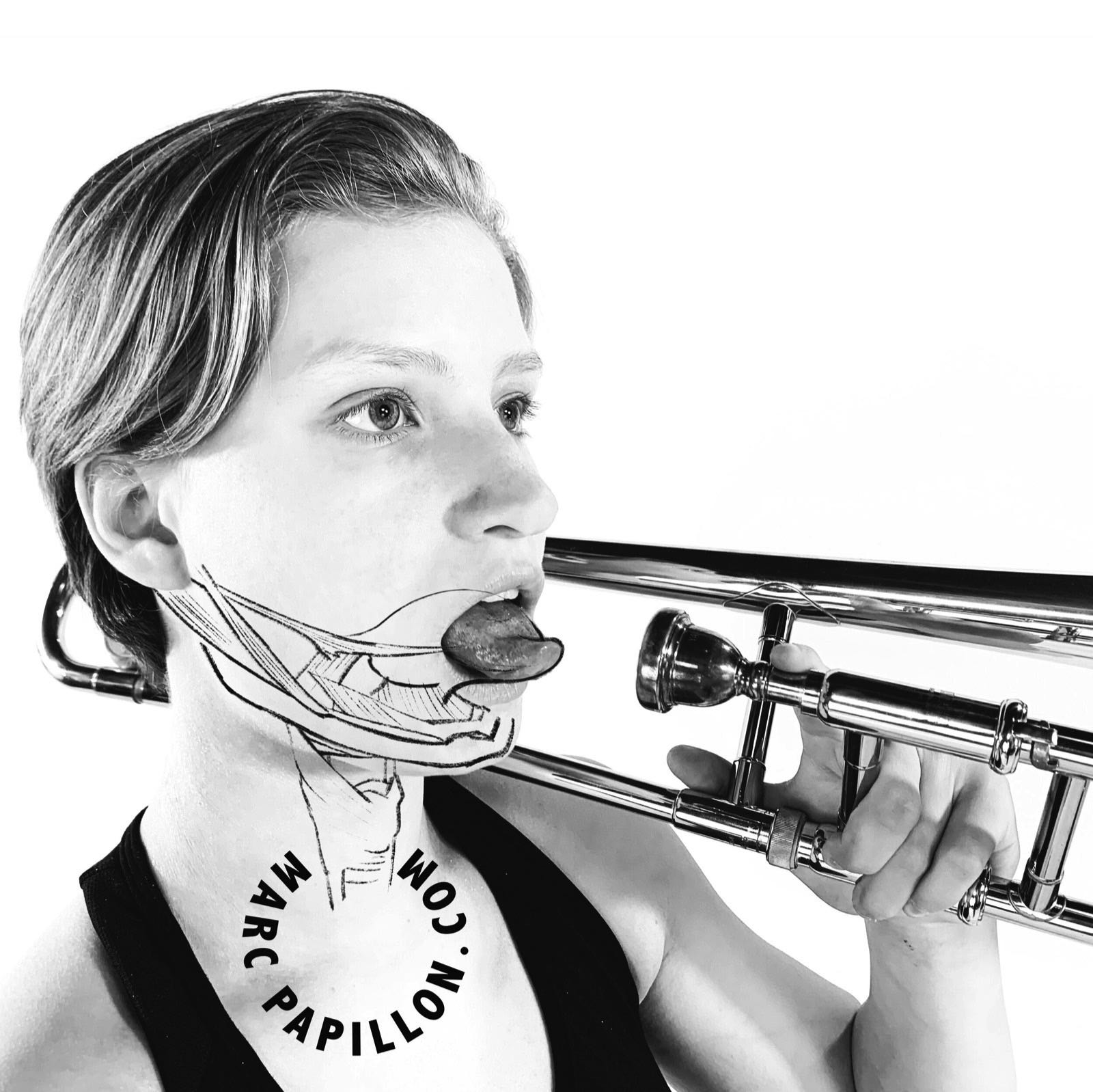
A trombonist, with the face and neck muscles drawn.

Another example: a lack of flexibility as you descend into the low register comes from an embouchure that is too relaxed. This problem makes you compensate, creating unnecessary tension and fatigue.

Let’s not forget that the quality of the embouchure and lips depends on the dynamics of the tongue and the breath. The tongue is directly involved in controlling the airflow and spares the embouchure and lips from having to compensate.

Focusing on the embouchure alone creates tension:

  • Your jaw tightens, you clench your teeth and stiffen your neck, your throat closes.
  • The agonist/antagonist muscle balance of the embouchure can break down.
  • If the lips compensate, they tire and can end up overworked.

To optimise your embouchure or your lips, you need to adjust your shoulders, your vertical axis “from head to toe”, your breathing and your tongue.

Prevention, optimisation and teaching

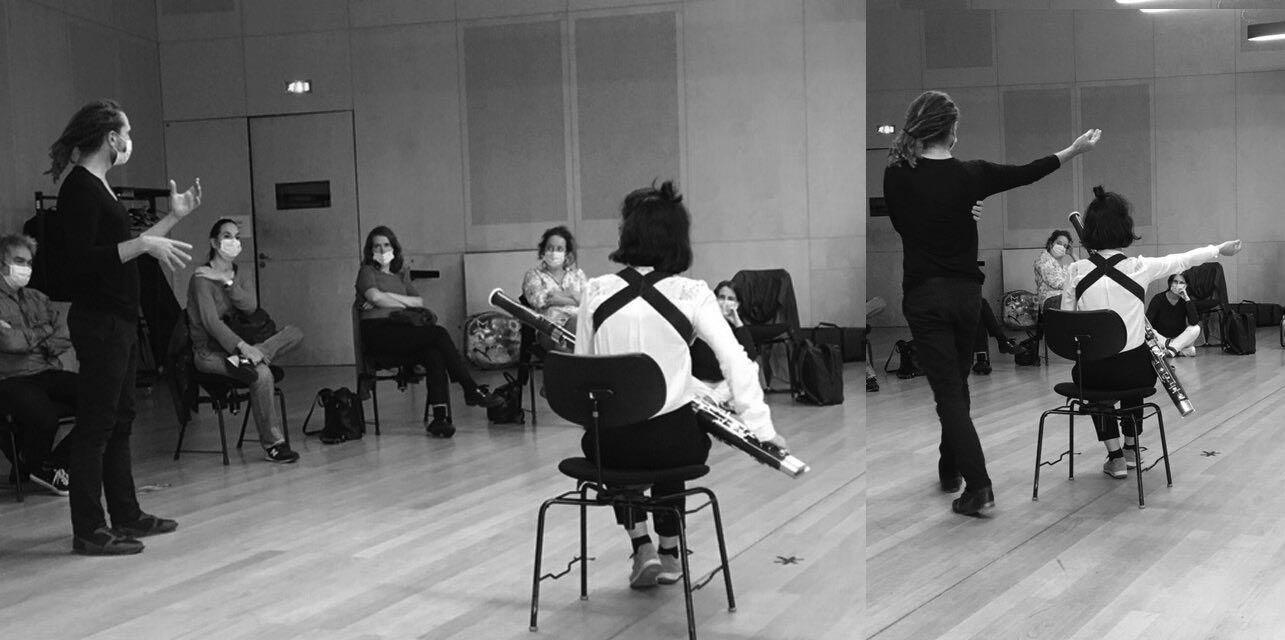
Workshop by Marc Papillon in a conservatoire or with an orchestra.

Prevention is essential to avoid or reduce the onset, development and severity of the functional disorders that affect the youngest players and the most seasoned alike.

  • Physical conditioning: muscle strength, endurance, plyometrics, proprioception, dance-specific technique that supports and refines technique, injury reduction.
  • Adjusting your workload, rest periods and the way you organise your practice.
  • No complete rest: training is adapted to optimise the quality of your work according to your projects.

Organisation

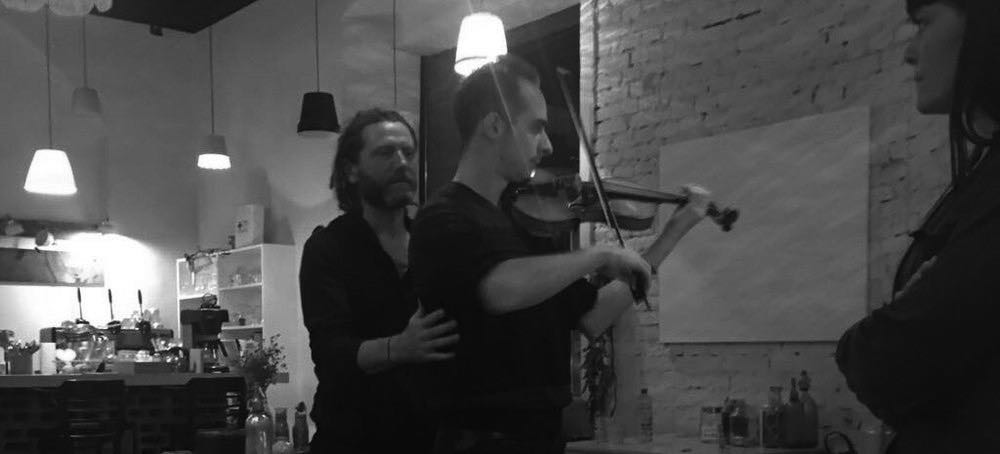
Individual working session with Marc Papillon.

Tailor-made training that takes into account your goals, your schedule and where you live.

Together we build the content of your training around your needs and as you progress. The topics covered are listed below, all directly linked to your playing:

  • Introduction to the Workshops
  • Assessment and Defining Your Work Directions
  • Organising Your Practice / User’s Guide
  • Myths and Realities
  • Anatomy of the Hand
  • Free Your Fingers
  • Tired Lips
  • Tone without Rigidity
  • All about Your Shoulders
  • Managing Stage Fright
  • Visualise to Feel Better
  • Self-Esteem and Perfectionism
  • Between Effort and Pleasure
  • Pain-Free Computer Work
  • Warm-Up
  • Anatomy of the Thumb
  • Anatomy of the Shoulder
  • Anatomy of Breathing
  • The Technique of the Hand’s Functional Base
  • Warming Up the Hand
  • The Point between Thumb and Index Finger
  • Finger Independence
  • Between Power and Finesse
  • Hand Set-Up
  • The Dynamics of the Tongue
  • A Relaxed Jaw
  • Clear and Precise Articulation
  • Toned Tongue, Relaxed Neck
  • A Supple, Mobile Back
  • Your Spine
  • Your Pelvis, Your Foundation
  • The Seated Position and Its Advantages
  • That Point between the Shoulder Blades
  • Strengthen Your Shoulders
  • Free Your Shoulders
  • Powerful Shoulders
  • Fluid Breathing
  • The Keys to Relaxation
  • Managing Emotions
  • Focal Dystonia
  • Anatomy of the Foot and Ankle
  • All about Your Feet
  • From the Foot to the Hip
  • Proprioception and Strengthening

There are several ways to organise your training, depending on where you live and when you are available:

  • individual sessions in Paris,
  • individual sessions remotely, by video call from home,
  • group sessions in Paris,
  • group sessions by video call from home,
  • through a library of around a hundred video workshops that you can watch at any time on your computer, tablet or phone.

We work together in Paris in a space dedicated to artists. The videos let you watch specific content again and again and take it in even faster. We follow an action plan drawn up at our first meeting, which evolves over time to meet your needs.

Group sessions in Paris, made up of 3 to 5 professionals, speed up the learning process. These sessions are especially rich because everyone’s questions benefit the whole group. Depending on where you live, we can also work remotely and combine all of these options.

All these formats naturally complement one another, so you can choose whatever suits you best and progress at your own pace.

Please call me, or reply by email leaving your phone number. I will be delighted to support you personally in your projects.

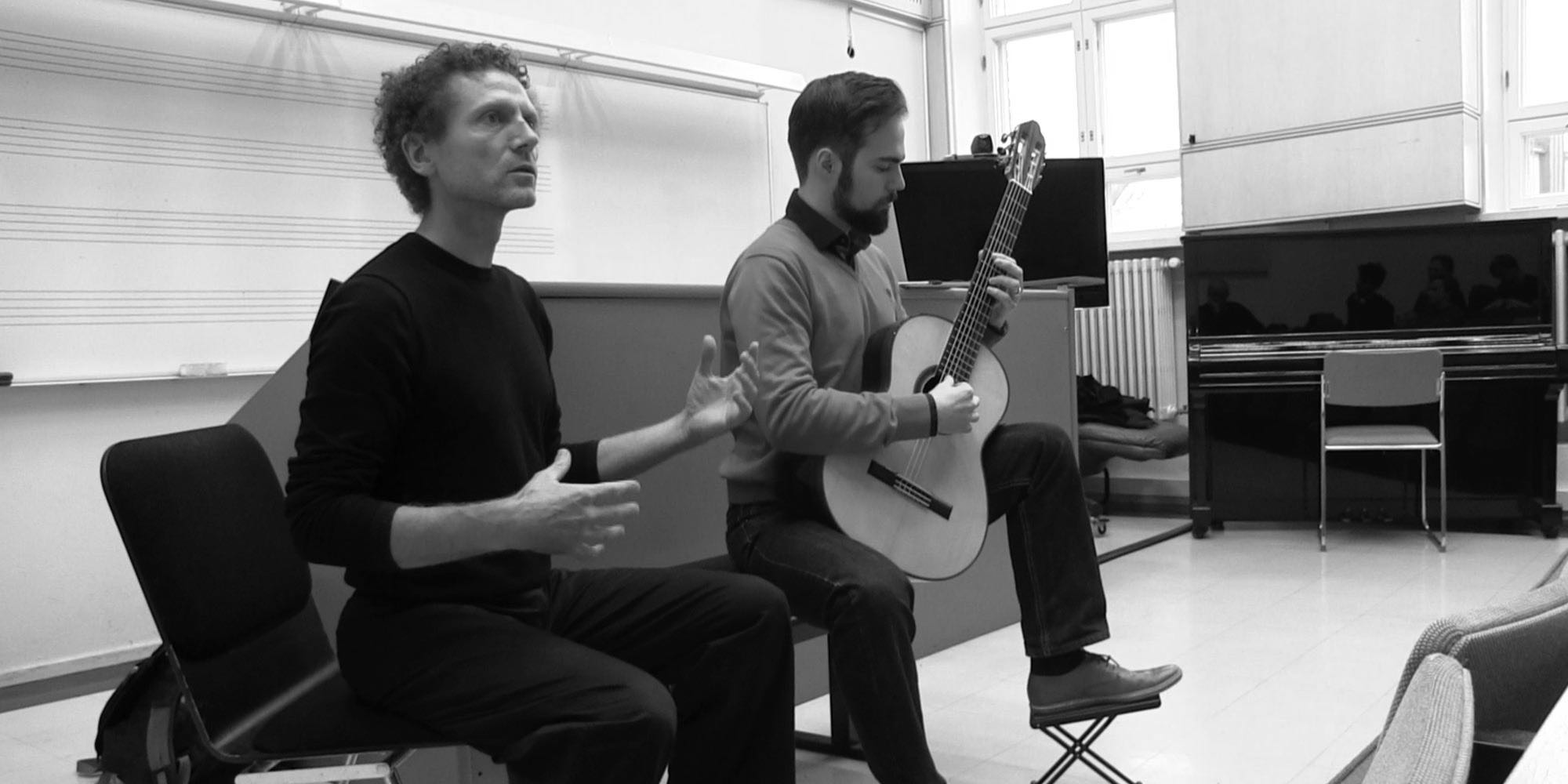
Marc Papillon, standing, guides the movement of a young seated guitarist.

Individual training

In Paris or remotely, at your own pace

Funding

The following courses can be funded for performers with French intermittent du spectacle status, teachers at music schools and conservatoires, and orchestral musicians.

  • Physical and mental optimisation and preparation for musicians, actors and dancers
  • Competition and audition preparation: optimisation, stage fright and performance for musicians, actors and dancers
  • Physical and mental optimisation and preparation for trios, quartets and quintets

We take care of the paperwork, so you can focus on your training and put it into practice straight away.

Leave me your phone number and I will answer all your questions: contact@marcpapillon.com
See you very soon,
Marc, 06 62 23 61 03

Our sessions will be

Personalised

Our first sessions will be devoted to assessing how you organise your work (technically, mentally and strategically) and to building a personalised plan that meets your needs and goals. In groups or one-to-one, online or in person: I love to travel and come and meet you.

Targeted

Everyone has weak spots on the road to excellence. I will work closely with you to climb those mountains once we have clearly identified and prioritised them. Going on stage and playing with your flaws, while making full use of all your resources, is liberating.

Integrated

Being an artist is about more than practising and improving your playing, so I will share other useful tools with you, such as motor imagery, mental imagery, mindfulness and all the tools to be integrated step by step (zero pain, zero anxiety) for complete freedom of expression.

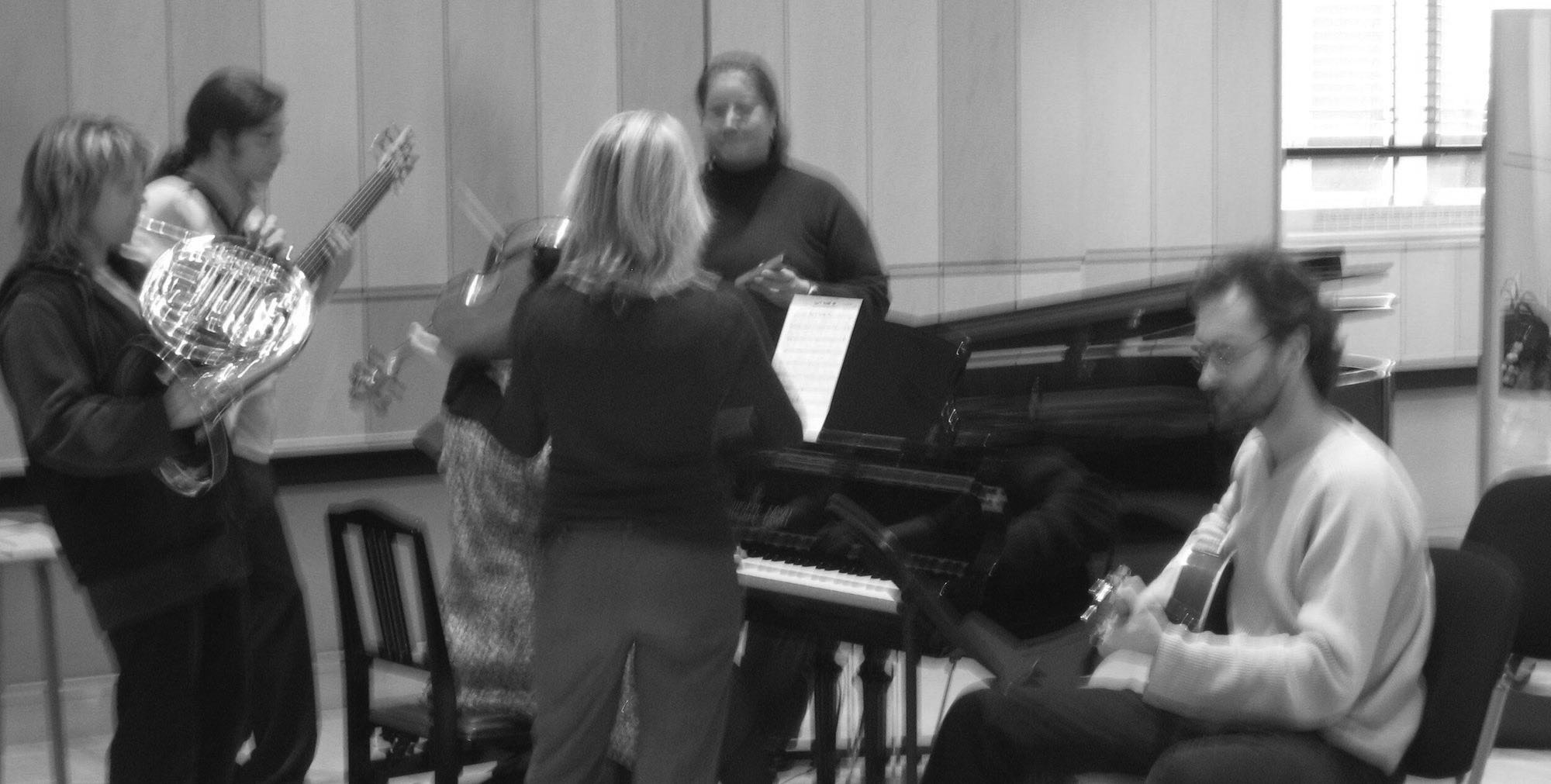
An ensemble of guitar, violin, cello and double bass plays in a circle during a workshop.

Group training

Trios, quartets, quintets · classical, jazz, contemporary

Group dynamics

Workshop by Marc Papillon in a conservatoire or with an orchestra.

Do you play in a chamber music, jazz or contemporary music ensemble? Invite your ensemble to go even further. Funded training for intermittents du spectacle.

For the members of such ensembles, playing together requires not only high-level instrumental and artistic skills but also a shared search, by every musician, for cohesion that is both technical and aesthetic. Group practice fosters exactly this kind and degree of commitment, at once personal and collective.

Such groups are, by nature, built to last. An established ensemble is not just three, four, five or six musicians performing a score: it is human beings in musical dialogue. And, in professional ensembles, they do it for an audience.

Group dynamics offers a fresh perspective on the following areas of work

  • Concentration and self-confidence
  • Developing competitive strategies
  • Injury management and return-to-play rehabilitation for musicians
  • Living with your emotions in general, managing stress
  • Motivation, pre-competition and competition performance routines
  • Turning limiting beliefs into positive ones
  • Organising your work, efficiency
  • Knowing your body as a point of reference
  • Improving technical skills
  • Getting back to a healthy lifestyle
  • Rediscovering the joy of playing
A workshop in a rehearsal room: a harpist plays while the other musicians listen, some standing, some seated.

Preparation built on 4 directions

Physical · Technical · Strategic · Mental

Physical

away from the instrument

The keys to physical preparation before playing (rehearsals, auditions, concerts, competitions). Building endurance, flexibility, reactivity, stability and power, and managing the body in space.

Technical

at the instrument

Linking the technical demands of the instrument to the principles of functional anatomy: tone, vibrato, shifting, tempi, dynamics, air column, embouchure flexibility, attacks and so on. Spreading your effort, saving your energy…

Strategic

organising your work

Learning to organise your practice time and your priorities, becoming more efficient, taking breaks… An optimised strategy frees up time.

Mental

mindset

Developing concentration and playing with confidence in all circumstances, with clear goals. A subtle, ergonomic approach develops the qualities you are looking for: velocity, endurance and the joy of playing together.

The workshops

Workshop by Marc Papillon in a conservatoire or with an orchestra.

The workshops are designed so that individual musicians and the ensemble as a whole can use the tools explored during these days from the very next rehearsals and concerts.

With group coaching, you get access to the video workshops a month before we meet, giving you time to watch them as many times as you need.

Prevention is essential to avoid or reduce the onset, development and severity of the functional disorders that affect the youngest players and the most seasoned alike.

These training and coaching days take place at your usual rehearsal venue or in Paris.

One-to-one sessions, then as a group

Individual working session with Marc Papillon.

In a group, each musician benefits from the others’ experience. The mirror effect is constructive both for teamwork and for the musician’s physical and mental health.

The morning is devoted to clearing up functional misconceptions in individual meetings, while the rest of the group is already working on the directions set out at the start of the day.

In the afternoon, we all come together to apply and develop your new tools within a new group dynamic.

The work can then continue throughout the year to go even further, for example to prepare an upcoming concert.

Contact me by email or phone and we will plan the programme for the day together.

Each of us has the resources to “cope”: how can we identify and refine them so as to use them to the full on stage or whenever we perform in front of an audience?

Participants are given tools to carry out this self-assessment. Developing new techniques for coping with performing in public, and putting them into practice at the right moments.

The course is based on putting into practice the various psychological resources we have for achieving the best possible performance, and on practical techniques that give you greater control and greater self-efficacy on stage or in front of an audience.

This course focuses on practising mental and physical techniques to achieve an optimal musical performance.

A lecture hall full of attentive students and musicians during a talk.

Training for institutions

Conservatoires, orchestras, schools

Supporting artists

Marc Papillon helps artists learn quickly how to perform at their best:

  • by offering the functional anatomical foundations of body technique,
  • by sharing the urgent need to slow down and take time to feel, in order to gain better control,
  • by defining the best possible movement ergonomics so that effort is well judged,

so that, in the end, they become ever clearer about their needs, abilities and direction.

Supporting artists and giving them a practical view on how to integrate new knowledge:

  • the teaching misconceptions that lie at the root of occupational disorders,
  • anatomy, technique and managing emotions,
  • organising your work, and visualisation.

Marc shares his work with you and keeps creating new, specific tools every day.

A violinist balancing on one leg, her body covered in anatomical drawings.

The artist’s body

The hand · the embouchure · the back · the shoulders

The hand

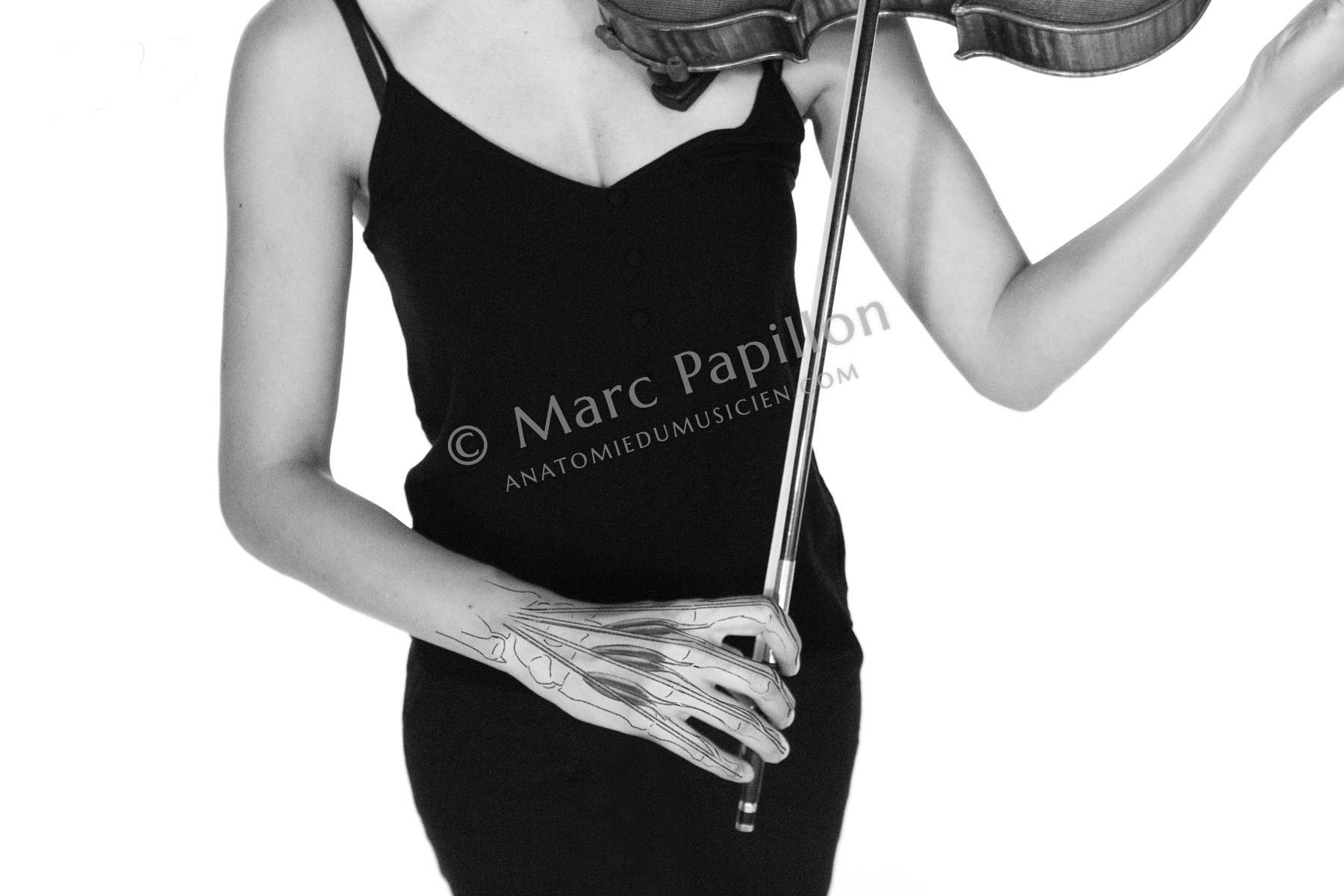
Right hand holding the bow: bones and muscles of the hand drawn

The hand is an incredible, complex piece of architecture.

Every day you take the time to develop better sensations.

Technically, wrist stability is the key to finger freedom. Yet wrist “flexibility” is all too often what gets taught.

Another example of misconception: people often try to “relax” the thumb. Yet the thumb is the pillar of hand stability: whether moving or still, it gives the other fingers their freedom.

When these reference points are disrupted, the hand loses its balance, causing pain and anxiety.

Regaining a stable, sensitive and powerful hand gives the fingers back their agility, independence and precision.

The embouchure and lips

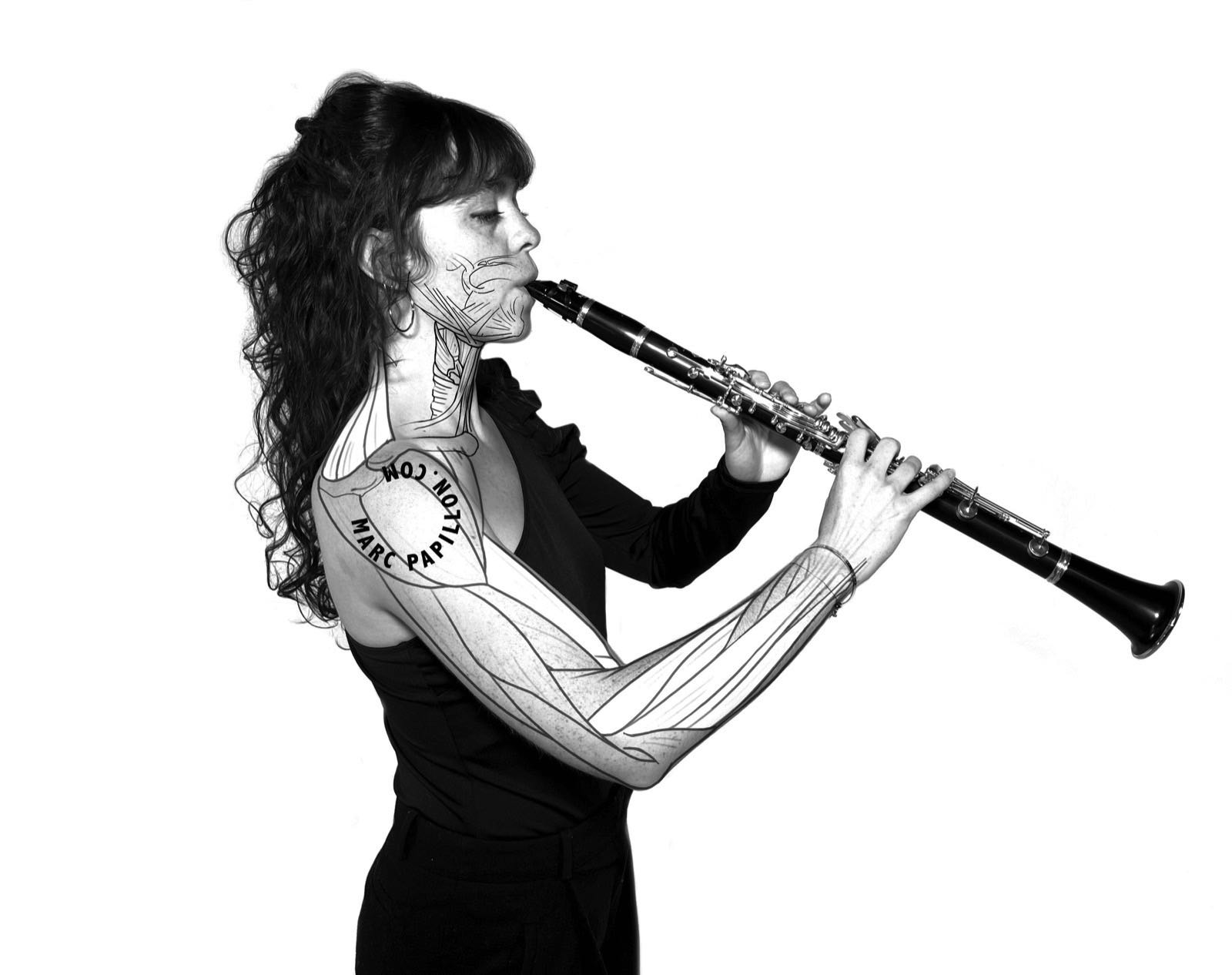
A clarinettist in profile, with the face and arm muscles drawn.

A stable embouchure, a relaxed jaw, supple lips, a well-controlled tongue.

For wind players, finding a balance between the constrictor muscle (orbicularis oris) and all the dilator muscles is fundamental.

While the dilator muscles pull in every direction, radiating out like the rays of the sun, the lip depressor muscles are all too often neglected.

An embouchure that is too relaxed leads to compensation (tension in the neck and throat, a clenched jaw), limiting flexibility in the low register and encouraging fatigue.

Focusing on the embouchure alone creates tension:

  • Your jaw tightens, you clench your teeth and stiffen your neck, your throat closes.
  • The agonist/antagonist muscle balance of the embouchure can break down.
  • If the lips compensate, they tire and can end up overworked.

The quality of the embouchure and lips depends directly on the dynamics of the tongue and the breath. It is the whole system (tongue, breath, posture) that needs adjusting to preserve freedom of expression.

The back, the vertical axis

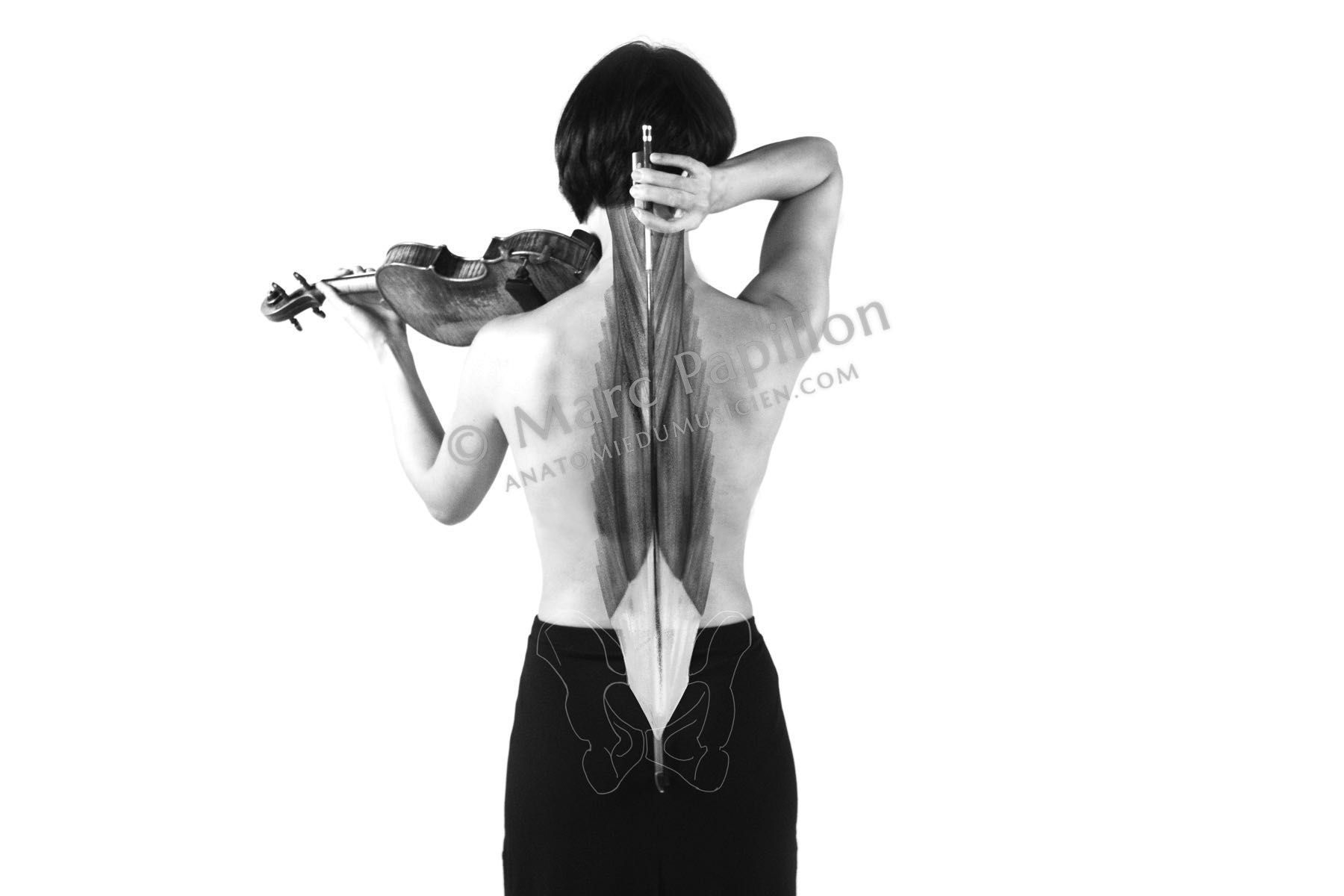
Violinist seen from behind, bow held along the spine: back muscles drawn down to the pelvis

A vertical axis that is “toned and relaxed”, from head to toe: stability, grounding and endurance.

Whether we are sitting, standing, walking or resting, our spine is part of our axis.

“I need to sit up straight” is a common and tiring thought. Settling into slackness, or even slumping, is no less tiring. Lifting the head and pulling the shoulders back is not the right answer either: it causes fatigue.

Add to that breathing too low, and the result is inevitably a slack abdominal wall and tension in the lower back or neck.

Muscle tone is the key to physical and mental relaxation. Abdominals, glutes, back muscles, feet, pelvis, back, breathing: a toned axis for a balanced head.

Stop fighting and play with gravity! The right balance is active tone: abdominals, back muscles, pelvis, breathing. This tone lets the head balance effortlessly and frees the musician from the struggle against gravity.

The shoulders, the horizontal axis

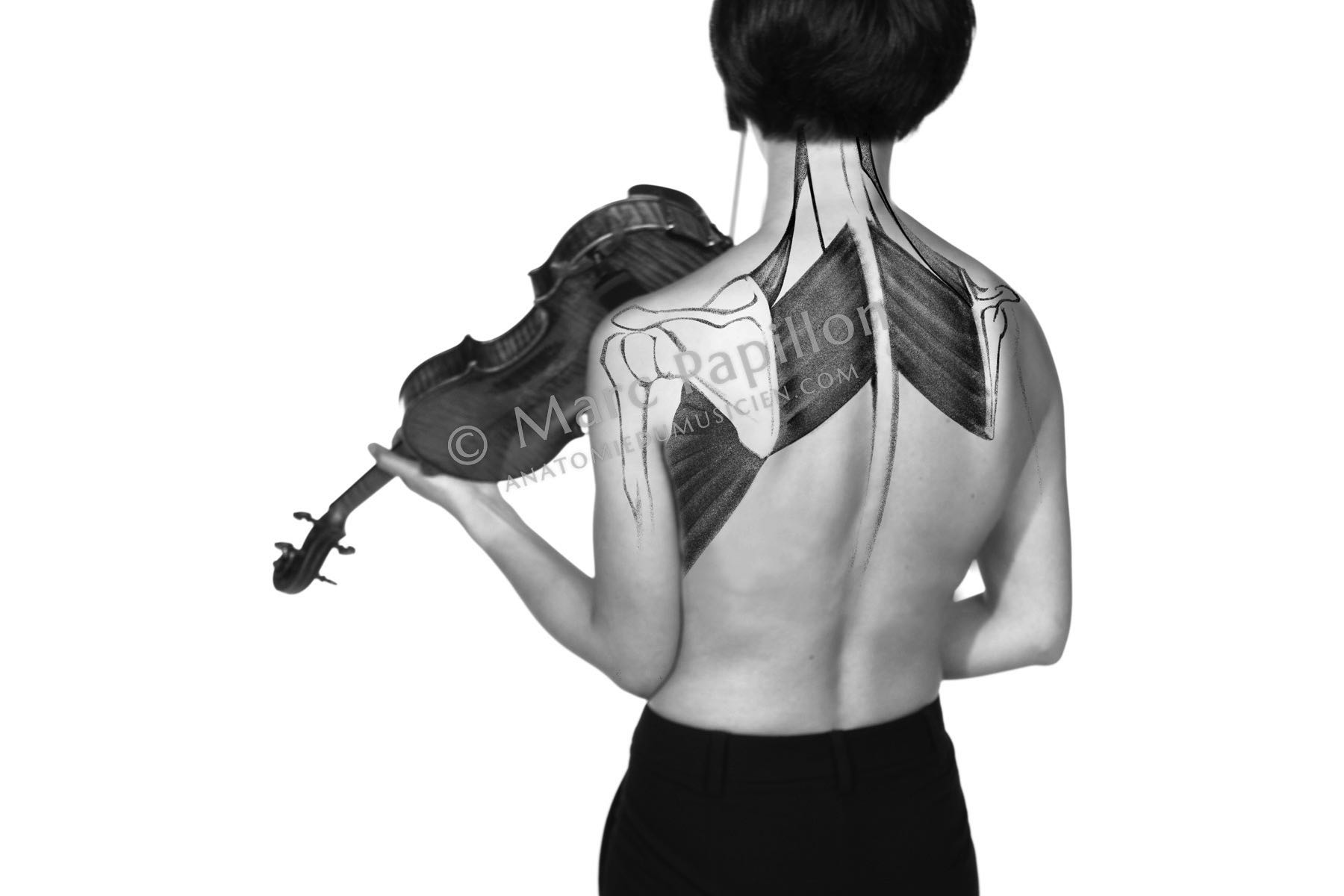
Violinist seen from behind: trapezius, scapula and shoulder muscles drawn

Powerful shoulders free the lips and the hands.

Playing means holding your arms up in a relatively static position. Your shoulders and neck get tired, so you try to relax them. It is a common refrain, but by “relaxing” them you actually tense them! Because the weight of the arms bears down on the muscles of the upper back.

The shoulders play a fundamental role. Held in suspension, they carry the arms and determine how freely the hands and breath can work.

Excessive relaxation tires the neck and restricts breathing. Pulling the shoulders back causes pain between the shoulder blades.

Conversely, engaged, toned shoulders take the load off the neck, free the embouchure and the hands, and build self-confidence.

A daily challenge

Individual working session with Marc Papillon.

Passing on and sharing. The joy of effort.

Functional mistakes are often absorbed far too young: the search for excessive physical relaxation leads to a great deal of compensation. The shoulders, wrists, belly, thumbs, tongue and throat are the areas most targeted in this quest for relaxation.

So much advice handed down from generation to generation keeps these misconceptions alive, with consequences for comfort, velocity and endurance.

With a more conscious approach to functional anatomy, received ideas are gradually replaced. The tools needed for expression, velocity and enjoyment make this learning easier.

From teaching misconceptions to functional anatomy

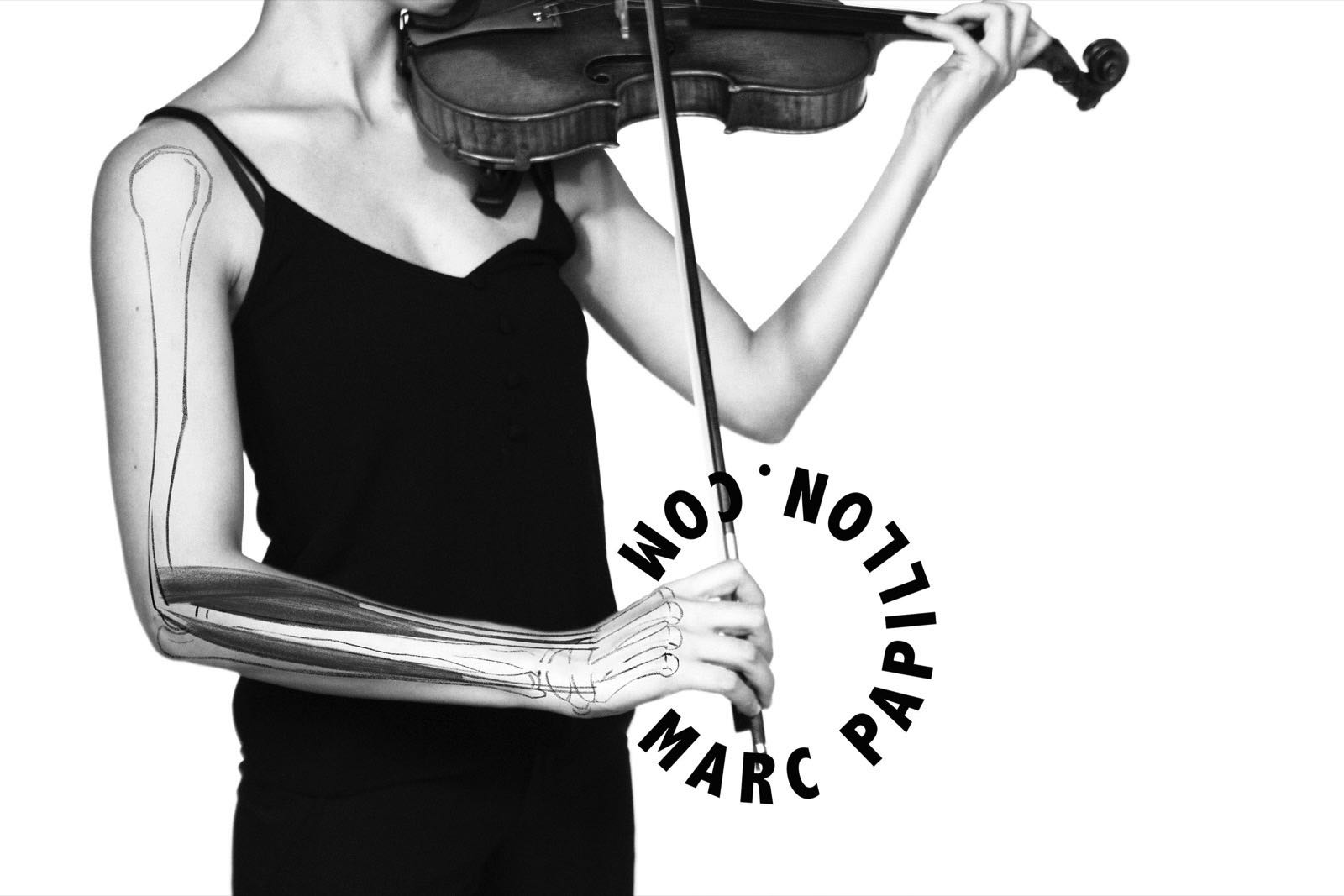
A violinist, the forearm extensor muscles drawn on her skin.

Music teaching is advancing rapidly and can now draw on functional anatomy. It is essential to bring this knowledge into teaching.

It is time to unpick these misconceptions and to realise, for example, that immobility is one of the main causes of functional disorders. Excessive repetition and a lack of stability are the other factors that favour functional problems.

Poor movement ergonomics, perfectionism, forcing and skipping breaks are all reasons that show how important it is to organise your work.

Movement ergonomics for better endurance

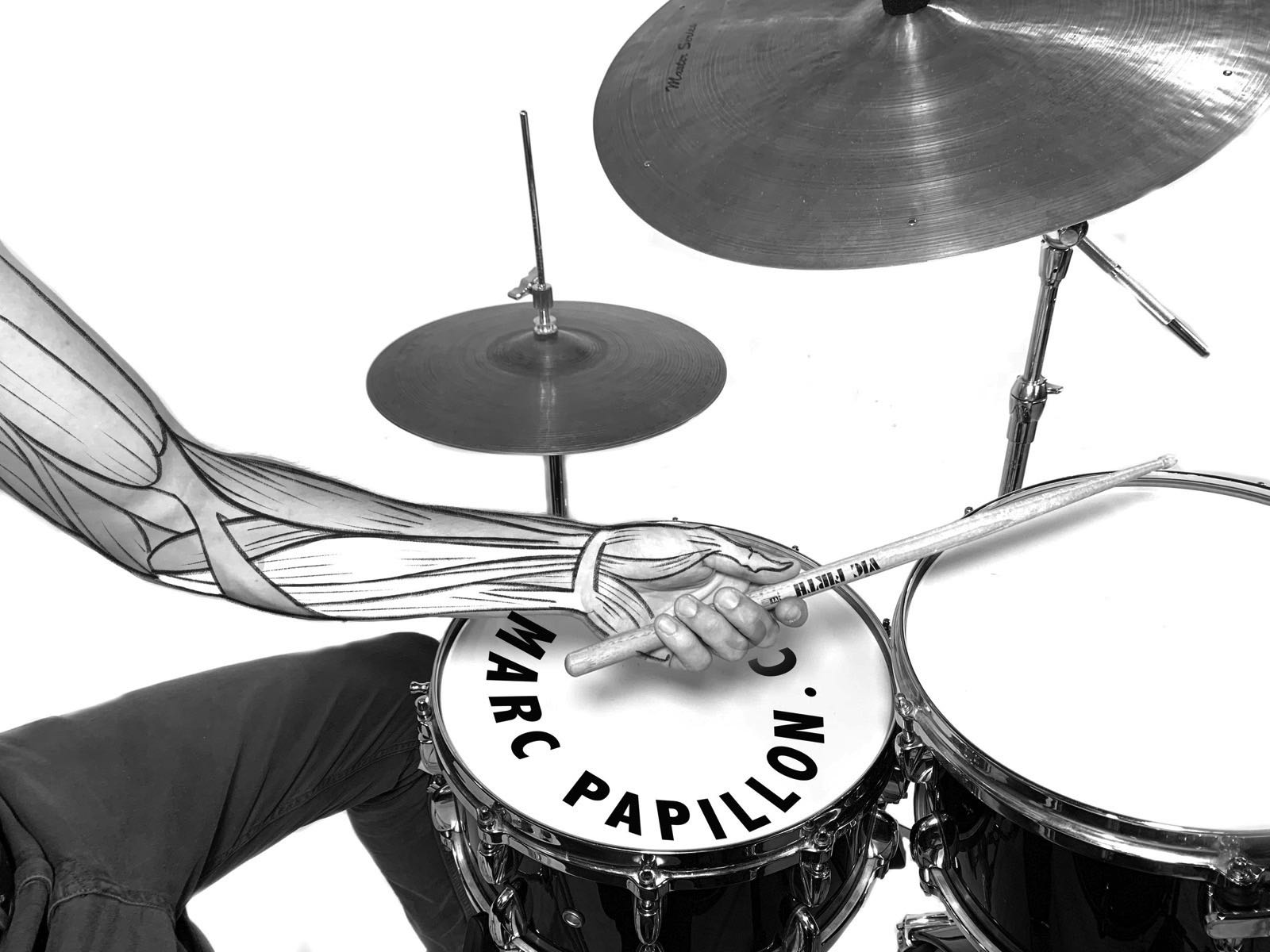
An arm above a snare drum, with the wrist muscles drawn.

Playing music and dancing involve repeated biomechanical strain, which can lead artists to give up their practice or slow it down considerably, weighing psychologically on their health.

The generally accepted criteria for defining repetitive work as a factor of occupational strain are as follows:

  • performing repeated movements,
  • loading the same joints and body segments,
  • working under constraint (tempi, dynamics, interpretation),
  • for most of the working time.

Close-up on a work plan

  • Feel a muscle contraction with or without movement (isometric, concentric and eccentric)
  • Feel the movement of the skeleton through the muscle (from the inside or the outside, with the opposite hand)
  • Feel the consequences of the movement at the end of the chain
  • Visualise the movement
  • Carry out the movement and adjust it by listening
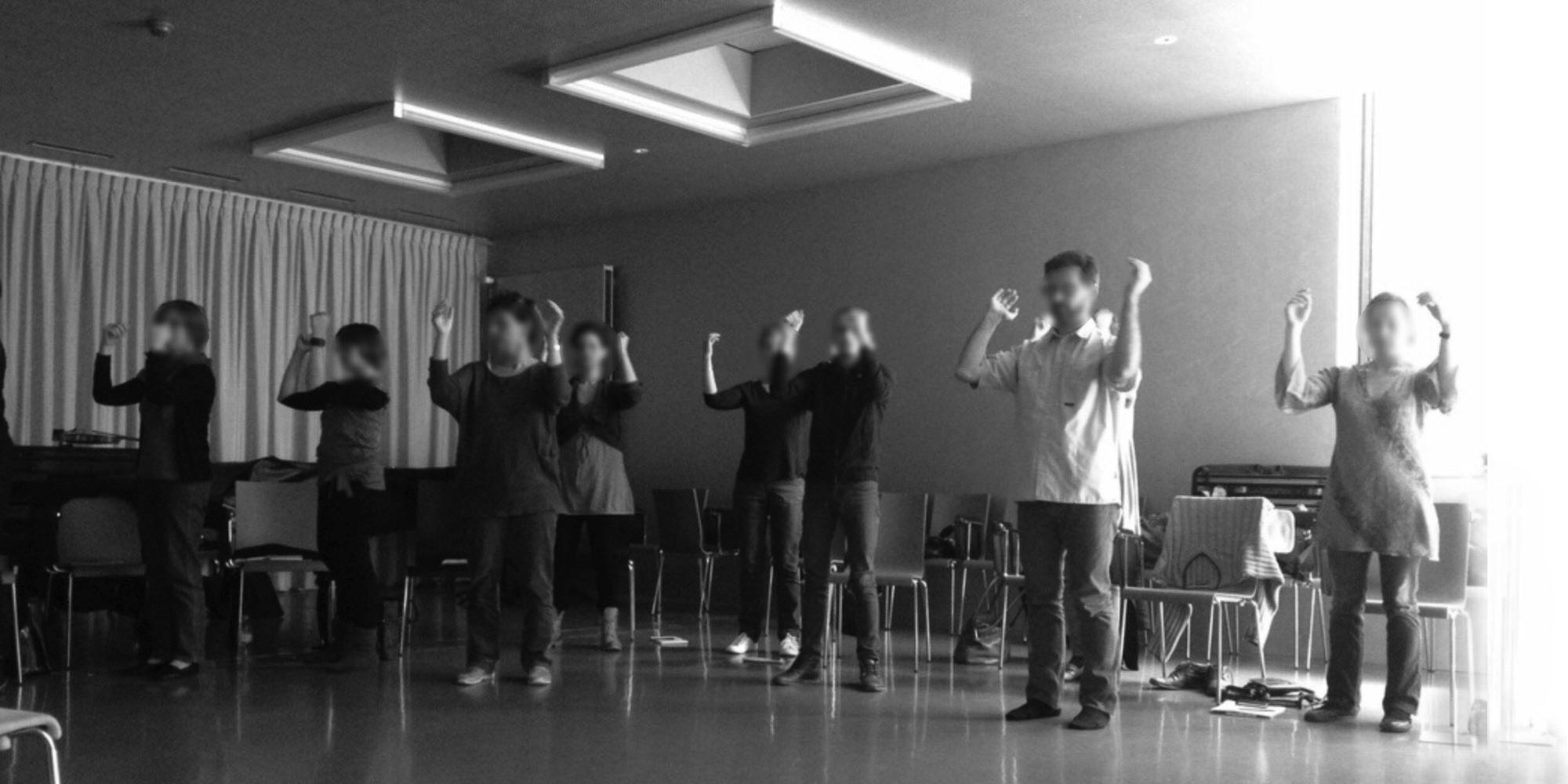
Group workshop: participants raise their arms.

Functional anatomy in the service of music and dance

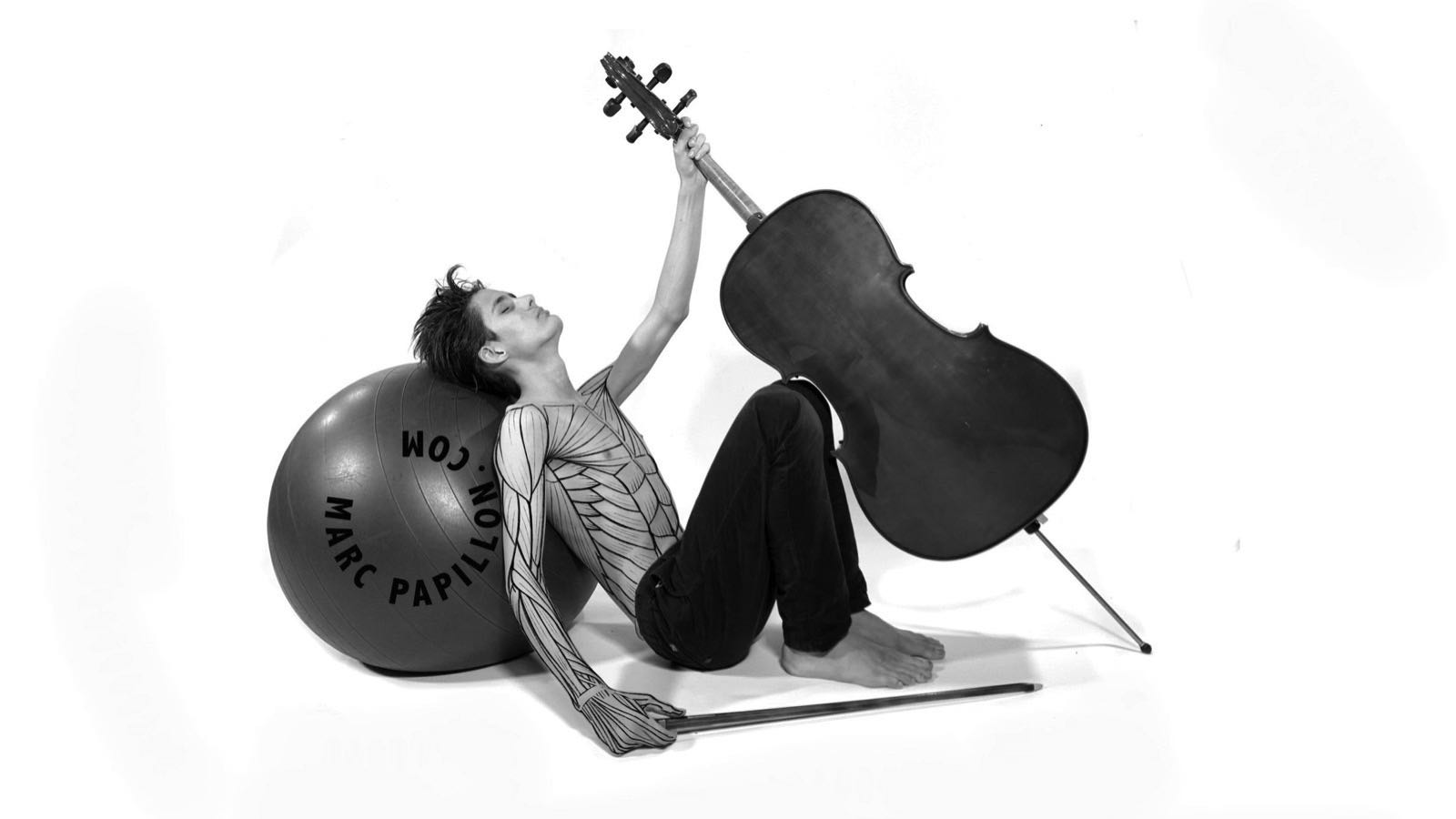
A cellist leaning back against a ball, with the arm muscles drawn.

This is not about teaching anatomy, but about offering artists shortcuts in response to the problems they face (back, neck or shoulder fatigue, difficulties with hand position, independence, fingers, hypermobility, anxiety, and so on).

Body technique can be simplified by taking functional anatomy into account.

These balances, which serve dance, music and every other art form, must be preserved and optimised so that you can go on performing for a long time with your whole body.

Managing emotions and breathing

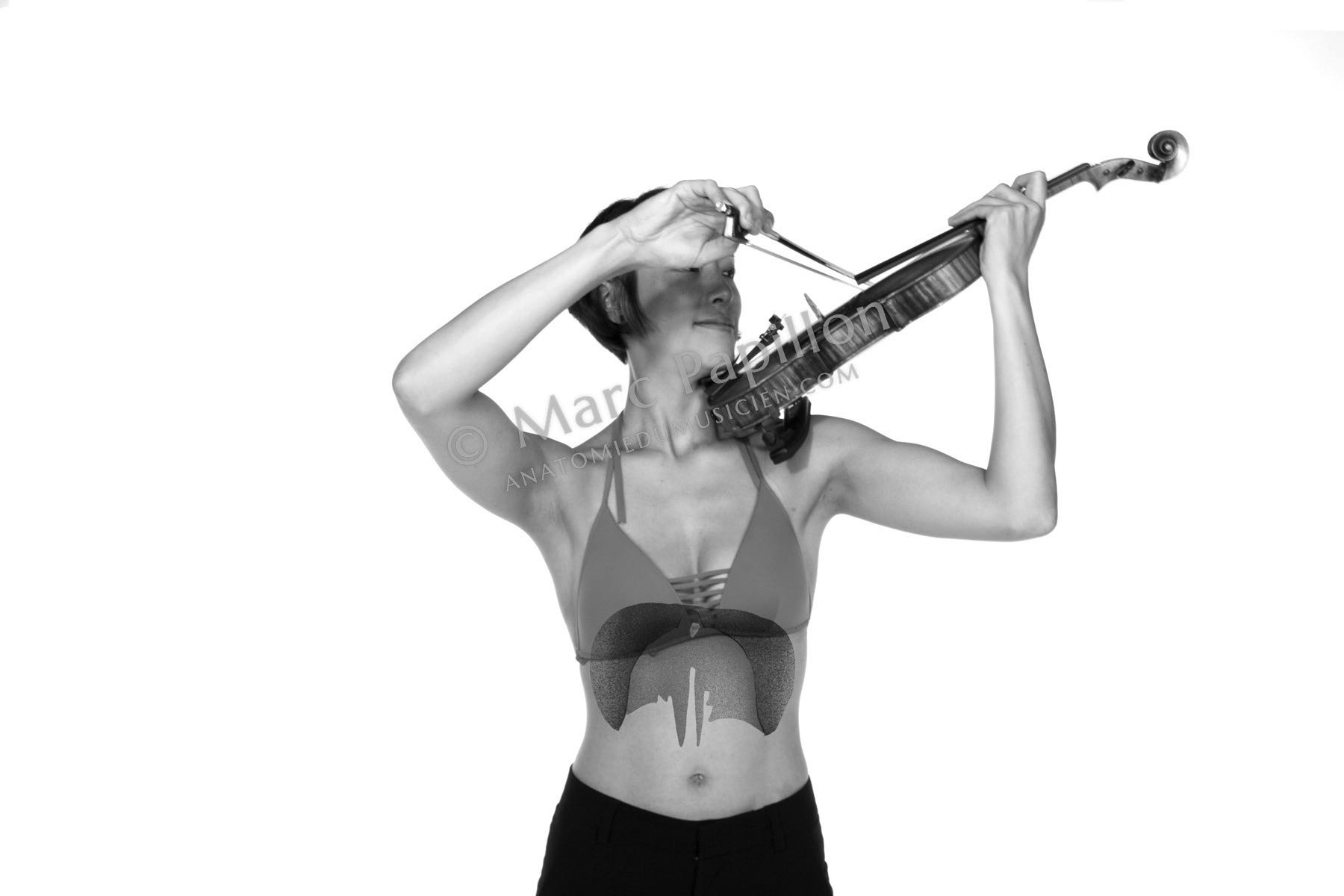
Violinist standing, violin held above the head: diaphragm and lungs drawn

Going on stage while struggling to manage your emotions takes you away from the joy of playing and dancing.

Playing and dancing without (overwhelming) emotion does not mean playing without musicality or without a sense of movement.

Develop your physical reference points, the ones that ground and stabilise you.

Poorly managed emotions limit technical ability and expression. You limit your own endurance, and that is precisely what stresses you.

So you have a choice: go on stage calmly while staying connected to your sensations, or lose yourself in your emotions. It is one or the other.

Breathing is also often used to manage emotions. But in the moment, breathing too low (abdominal, deep, belly or diaphragmatic breathing) does not relax you.

All this knowledge helps artists and teachers become more effective in their own practice and bring it into their teaching.

Stability and tone: the keys to relaxation

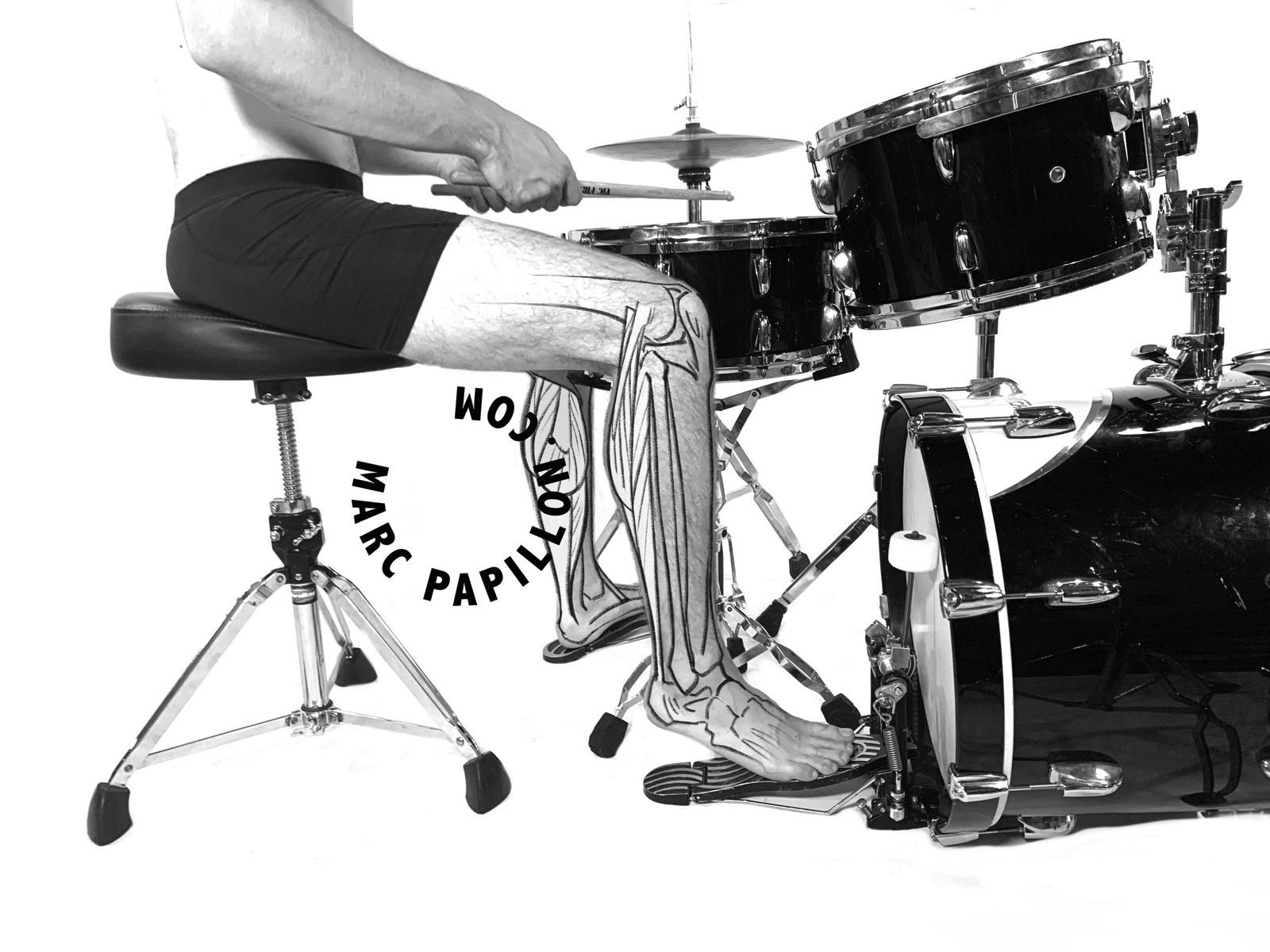
A seated drummer, with the leg and ankle muscles drawn.

Technically, wrist stability is the key to finger freedom. Yet wrist flexibility is all too often what gets taught.

Another example of misconception: people often try to “relax” the thumb. Yet the thumb is the most important finger of the hand: it contributes to the stability of the wrist and palm, just as the big toe is the most important toe of the foot.

A stable thumb, whether moving or still, gives the other fingers freedom of action.

Ankle stability is fundamental, as are the intrinsic muscles of the foot.

Losing your reference points and your “good” sensations is, of course, a source of great anxiety.

Becoming aware of these misconceptions makes it easier to optimise movement and to recover, and also increases the joy of playing.

These misconceptions disrupt how the hand works and encourage “tendinitis” and other dysfunctions.